
For the vast majority of South Africans plumbing gets no special attention until something goes wrong.
Plumbing is an essential part of daily life for everyone but it gets mainly overlooked because plumbing has become extremely reliable in most residential areas. Plumbers should thus be respected and the profession should be honored but you would be hard pressed to find any high school learner with a passion for unblocking drains.
Contents
Why Plumbing?
The answer…..
Water. Water sustains life in more than one way.
We use water for:
- Human Consumption
- Cooking
- Bathing
- Washing
- Waste Removal
Water plays an important part in all the functions mentioned above and plumbing facilitates it all.
Beginnings
The need for plumbing primarily arose from growing civilizations. Rapidly expanding early civilizations such as the Greeks and Romans ran into the problem of supplying their citizens with a clean and continuous supply of water. The other half of the problem which was and still is extremely critical is the removal of sewerage waste from households.
The latter being the primary cause of health and hygiene problems in that era. The solution would be plumbing even if the term was not coined yet, ever since the first Roman aqueduct and lead pipe systems the field has not looked back.
Basic Operation Of Plumbing Systems
Aim
Plumbing is essentially a system of pipes, valves, fittings, appliances and safety regulatory devices assembled within a building for the distribution and removal of water.
That sums up the main purpose of plumbing. The actual system may seem simple but the difficulty lies in the design and troubleshooting. Hence Plumbers…..
Operation
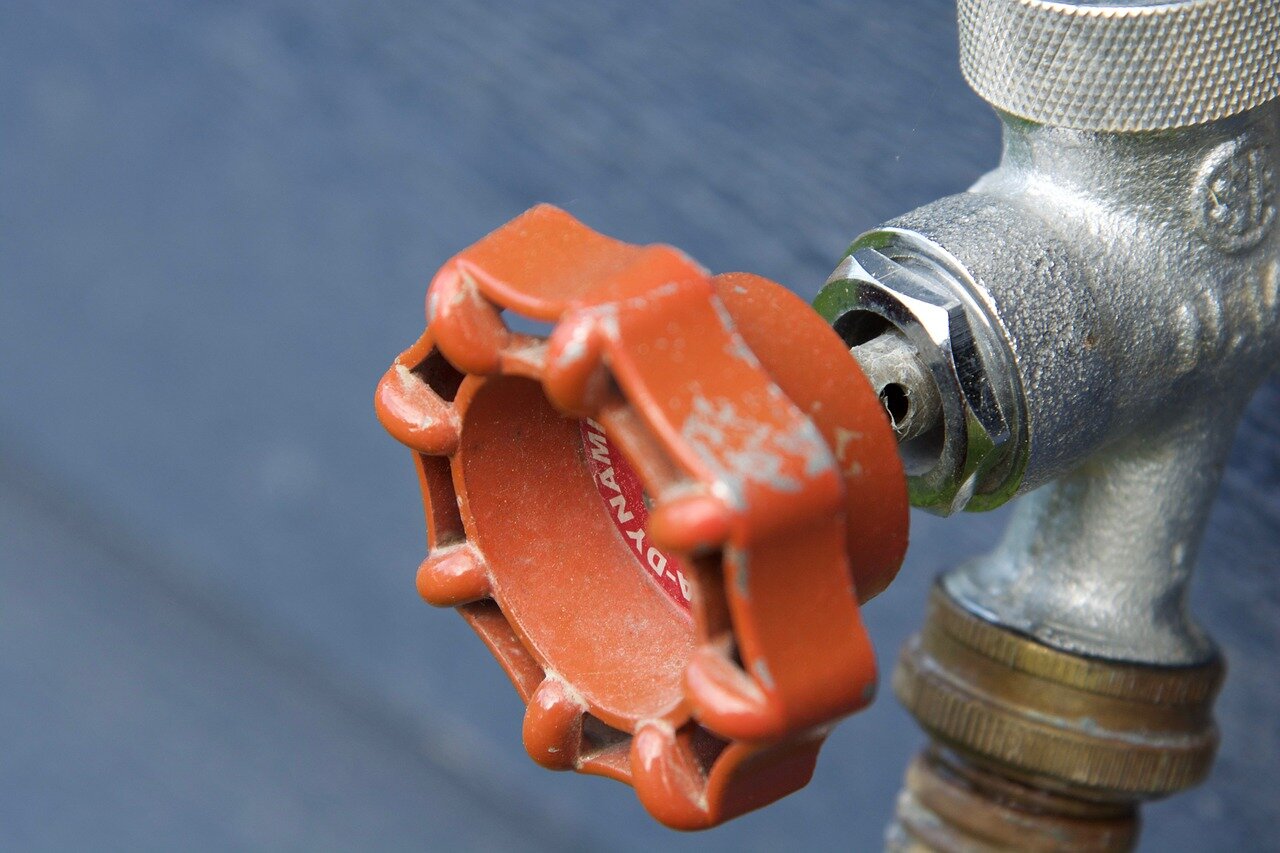
Local Municipality supplies most of the drinking water to residential properties in South Africa. They don’t do this for free though so water meters are installed on all incoming water supply pipes to homes. This water is purified and hopefully deemed safe for human consumption…..
Split
As soon as the water enters the home it splits into essentially hot and cold pipes. Water in the cold pipe will be circulated throughout the house but water in the hot pipe will first pass through the geyser to be heated.
These two pipes will then run to any rooms that need water.
- Kitchen
- Bathroom
- Swimming Pool
- Toilet
- Outside Taps etc
Obviously only cold water will be required in some places such as the toilet or swimming pool.
Output
78% of all the water that enters a household leaves it. The water and waste removal system in homes is largely dependent on gravity unlike the supply which is pressurized.
Thus all waste removal pipes are inclined downwards and traps are installed to prevent unpleasant sewer gases
from entering the home. Upon leaving homes the ‘dirty’ water gets taken to sewerage’s where impurities are removed before the next cycle.
The Plumber
The humble plumber falls in the middle of all this.
Plumbers are largely responsible for any planning, installation, maintenance and repairs on plumbing systems whether in homes or businesses and public facilities. The importance of the profession needs to be highlighted more in schools and society.

Plumber Rates
Hiring a plumber can be an eye opening experience or rather wallet opening. Plumbing rates are relatively high in South Africa and this is mainly due to the emergency nature of 95% of all plumbing jobs.
How are Plumber Rates Calculated
The short answer is guesswork. This is especially true for unqualified plumbers operating privately but there are pricing models available. Registered plumbers that own full time plumbing businesses will typically have set prices which could be based of f the following factors:
- Nature of Work: The most common plumbing emergency is by far the blocked drain. Most plumbers can handle these in about an hour but any maintenance or installation work may yield a larger bill.
- Time: Calling your local plumber at 2 am will cost you considerably more. Plumbing problems unfortunately do not always occur at the most convenient times so expect to pay more.
- Location: The travelling distance between you and your plumber may alter the call out fee that you get charged. Petrol, vehicle maintenance and insurance fees are all factors which influence the call out fee.
- Labor Fees: Labor fees can be split into the call out fee and hourly rate or can simply be combined. Plumbers that charged a fixed fee per job tend to be than plumbers that use an hourly rate.
- Material Cost: Any material used in the repair will obviously be billed with a price mark up. The material cost usually comes out less than the labor cost in most jobs.
Practical Tips for Hiring a Plumber
Phone Around. You should at least call five plumbers in your area for a quote. Pricing fluctuations are common place in the industry and they can be huge in some cases. Plumber A may charge you R1000 f or the first hour alone where Plumber B charges R700 to do the entire job. So taking the time to phone around could save you a few hundred rand.
Price does not always mean quality. Many consumers have the perspective that the more someone charges for a service the more competent the person is. This has been proven wrong on many occasions.
How to avoid this trap:
- Ask if the plumber is registered. You need to do this during the quoting phase and most plumbers will not take offence.
- Check if it is a valid plumbing business. Business owners will generally provide better service as there is more at stake for them than someone just working part time.
- Do they seem professional. Business etiquette and how to communicate with customers is largely ignored by poor plumbers.
Time is money. Time wasting always leads to money lost, usually the clients. This is caused by both client and plumber and is due to a few reasons.
Misinformation. Make sure that the information you provide the plumber is accurate if the cause is known.
Be Prepared. Make sure that you are available as soon as the plumber arrives, having him stand around
waiting on you will cost you.
Hiring a plumber will happen only once or twice in a life time for most people. This does not mean that you should not be prepared for it. The cost implications are high and ultimately the inconvenience of having a plumbing problem can be irritating especially for businesses. So take your time and hire the best plumber possible.
Plumber Training

Plumbing is considered by many as an odd job, that does not require any formal training nor qualifications. This however is extremely wrong. Plumbing is an essential service to any community and it will be forever. Thus the person that aspires to a career in the plumbing trade should be experienced and knowledgeable.
The ramifications of poor plumbing practices can be costly and many cases are found yearly. Thus hiring or becoming a qualified plumber should be our goal to keep standards in South Africa acceptable.
Plumber Training Options
There are primarily four ways to become a qualified plumber in South Africa: Practical Competency – Recognition of Prior Learning, Apprenticeship, Internship & Learnership
Each differing slightly but the main aim in each route is to train plumbers that are competent. Considerations are:
- Time: Becoming a qualified plumber will take you a f ew years to accomplish, there is no way to avoid this. Thus courses that promise you certification in a few months must be eyed with caution.
- Excellence: Mindset issues about the plumbing trade cannot affect your pursuit of excellence. Taking pride in your work will ultimately only lead to success and more satisfied clients.
Department of Labour Plumbing Trade Test
The Department of Labour regulate the quality of tradesmen in South Africa. They have standardized tests for most trades and certification by them is strongly recommended and or compulsory in most cases.
As a plumber you would have to pass this trade test to be certified. Thus you will notice that all the methods below all culminate in the dreaded trade test.
Practical Competency – Recognition of Prior Learning
Recognition of prior learning provides a way for plumbers with no formal training to write a trade test and achieve accreditation.
Prerequisites: You must have at least five years practical experience with proof that you have worked with a qualified plumber.
Process: Make sure that you are ready to do the trade test if not then apply for a refresher course. Have proof from your employer that you have been actively working with a qualified plumber for more than five years. Apply to write the trade test
Apprenticeship
A plumbing apprenticeship is the more conventional way to get certified. Going this route will provide great structure and hopefully enable the plumber to reach full competence in the allotted two year time frame.
Prerequisites: You need to get an apprenticeship with a registered plumbing company
Process: The company that signs you must pair you with a qualified plumber for the two year period for you to learn all the basics. You also need to complete plumbing modules at an accredited institution in the two year period. Your
employer must give you time to complete your modules and they may also fund the training. After the two year period if all your modules are passed you can apply to write a trade test and receive accreditation.
Internship
An internship allows you to study first and then apply to get practical work experience.
Prerequisites: You need to obtain entrance to an FET College or Technikon.
Process: Complete a National Certificate in Plumbing. Apply at a registered plumbing contractor to work with a qualified plumber for four years. After the four years you can apply to write the trade test.
Learnership
A Learnership is very similar to an apprenticeship but probably the best option here. It typically runs over a three year period and usually produces the most competent plumbers.
Prerequisite: You need acceptance into a learnership program with a registered plumbing contractor.
Process: Learnership programs require you to get practical work experience and training at an accredited training center. You will be required to spend at least two years with a registered plumber. About five months of full time study which can be paid for by your employer. As soon as the required modules are passed and the practical field training then the trade test can be written.
Becoming a plumber is not as straight forward as most people think. The time and money sacrificed will be worth it as the demand for plumbers could only increase.
Essential Plumbing Tools
Plumbing repairs come in all shapes and sizes. Some plumbing problems require the skill of a professional plumber but some tasks can be completed by anyone with at least a working knowledge of plumbing. It must be noted that plumbing jobs done poorly can come back to haunt your wallet so getting in a registered plumber should always be the first option.
Typical small household plumbing jobs: dripping taps, unblocking drains and leaking pipes. These form the majority of all plumbing work and can be tackled with a few essential tools. Most decently stocked toolboxes will contain many of the items mentioned below. If you do not have anything that remotely resembles a toolbox then investing in one should be your first priority.
Pipe Wrench
Pipe wrenches or bobbejaan spanners are primarily used to loosen and tighten threaded pipes. You typically need more than one wrench as one is used to hold and the other to turn. Serrated teeth on the wrench help with grip but a rag can be used where damage to the pipes outer surface is undesirable.
Plunger
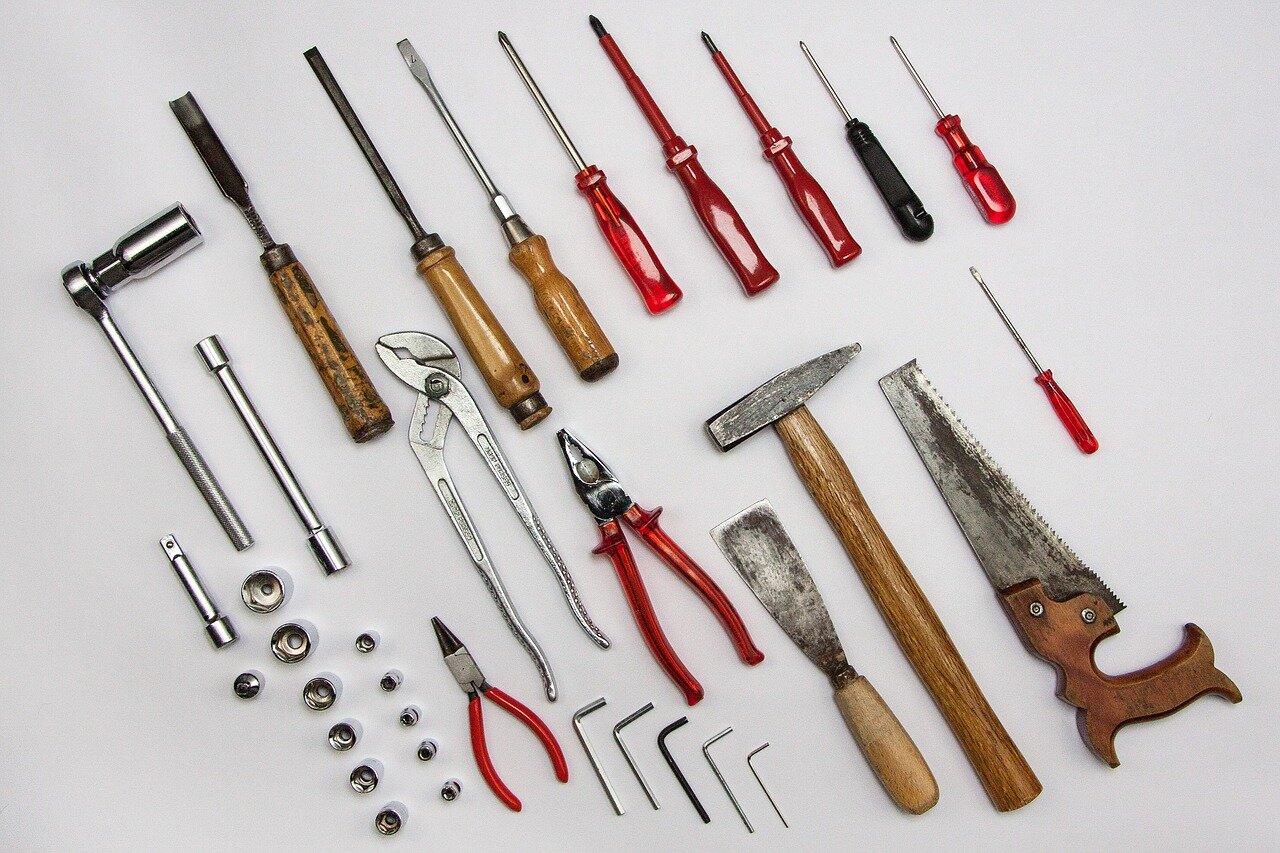
The most iconic plumbing instrument. Plungers are used to repair blocked drains by creating a vacuum in the plumbing system. They can be used in the toilet, bathroom and outer drains. Easy to use, cheap and readily available in supermarkets every house in South Africa should have at least one.
Hacksaw
Hacksaws are used to cut through metal and plastics. Cutting piping for new installations is mostly done using hacksaws. You should only require to buy a decent hacksaw once but keeping a few spare blades is essential.
Metal Files
A good set of round metal files are required for removing burrs from pipe edges. Its important to check that the files do not rub against each other as this will wear their working surfaces.
Water Pump Pliers
Water pump pliers have all the same functions as a pipe wrench. The major advantage of water pump pliers is the general low weight compared to pipe wrenches. The serrated jaws are also adjustable allowing usage on numerous pipe sizes. Thus buying a pair of these for the home should be sufficient for most plumbing jobs.
Sink Wrench
A sink wrench is used to tighten and loosen plumbing fixtures that are located in hard to reach places. A tool probably only suited to plumbers but a good buy nonetheless.
Shifting Spanner
Shifting spanners are used on various locations in home plumbing systems. Its important to make sure that the jaws are rigid when buying a pair as cheaper spanners will shift while tightening or loosening.
Drain Cleaner
Drain blockages form the majority of plumbing problems. Chemical drain cleaners are a cost effective way to keep your drain clean or to remove minor blockages. Safety precautions must be adhered to when using a drain cleaner as inhalation or eye contact can lead to a doctors trip.
The Items above will cost you no more than R2000 but they should last for a lifetime. Plumbers are not cheap. Knowing a few basics can save you more than the hiring costs.
Plumbing Tips
- Dripping taps: A dripping tap can use up many liters of water each year. Checking and replacing worn washers bi-annually can save you thousands on your water bill.
- Toilet flushes: Set the ball valve on your toilet to limit the amount of water per flush.
- Strainers: All your drains should have a cover or strainer to prevent large items from entering your plumbing system.
- Watch what you flush: Toilets are meant for two reasons, flushing garbage such as used sanitary products will only lead to long term problems.
- Hosing: Checking all the appliance water hoses from your washing machine, dishwasher and geyser should be done on a yearly basis. Look for heavily corroded, bulging pipes and spots where rubbing friction is evident.
- Hot water: Let hot water run down your drains to keep them flowing freely especially in guest bedrooms that are not used of ten.
- Find your main shut off valve: Many people do not know where their main shut off valve and water meter is situated.
- Grease: Oils and fats poured down drains can cause blockages.
- Geyser bursts: Install a drip tray beneath your geyser to prevent extensive damage to your ceiling.
- Home inspections: Before buying a home make sure that the plumbing system has been maintained to SABS standards.
- Plunger: Never use a plunger after using a chemical drain cleaner on a blocked drain. Possible back flow from plunging could spray in your face and on your body.
